
How buying a seat on a private jet works
Semi-private flights, public charters and empty-leg seats: what you are buying, and who is flying.
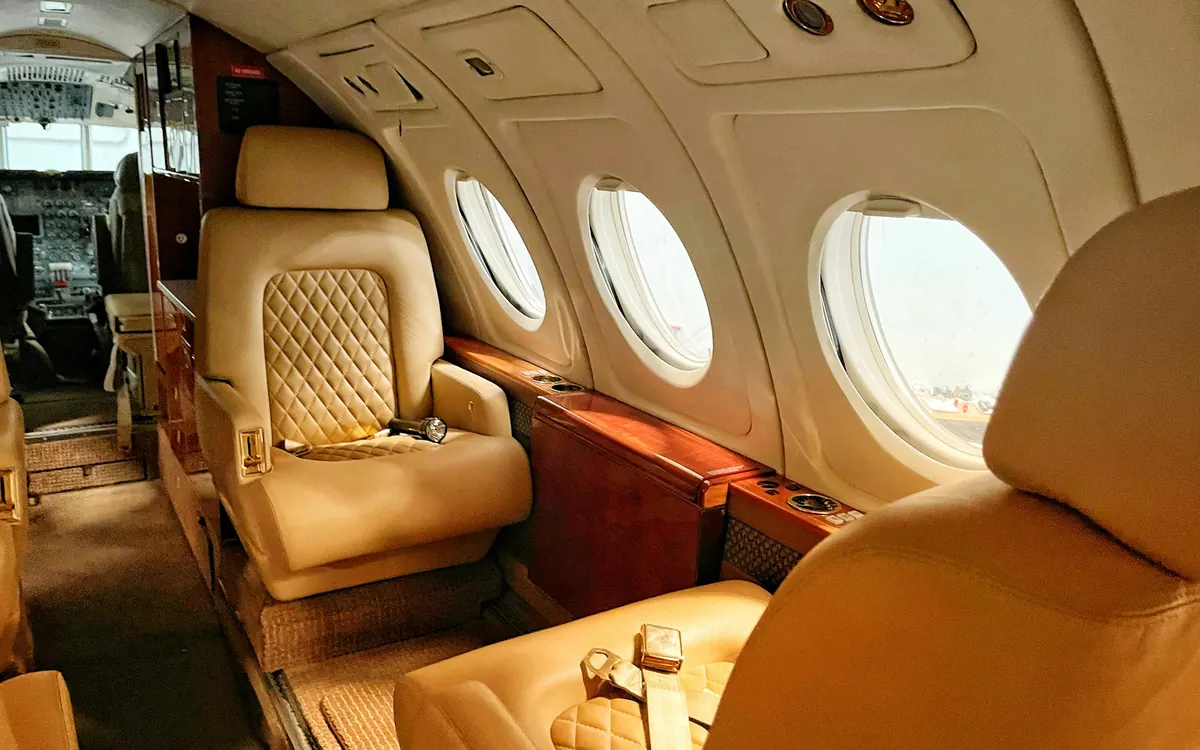
Most private flying is sold by the aircraft. You charter the whole jet, choose the airports and the time, and decide who comes with you. Buying a single seat is different: it only works on flights that are set up to sell seats one at a time. This guide explains the ways that happens in the US, who is responsible for the flight in each case, and what you are agreeing to when you pay.
Why seats are the exception
An on-demand charter is a contract for the aircraft. One customer, the charterer, books it, and an FAA Part 135 operator flies it with its own crew and under its own operational control. The charterer can bring family, friends or colleagues and can split the bill among them however they like. What an ordinary charter does not do is fill the remaining seats with strangers who each buy a ticket.
Selling individual seats to the public is a different kind of service with its own rules. In practice you will find seats on three kinds of flights: semi-private scheduled services, public charters and, now and then, a share of someone else’s charter or empty leg.
Semi-private scheduled flights
Semi-private carriers publish a timetable on a set of routes and sell seats individually, much as an airline does. The experience is closer to private flying: departures from private terminals or quiet corners of the airport, short check-in times, small cabins and a limited number of passengers. Some of these services fly under their own certificates; others are sold as public charters with a certificated carrier doing the flying.
The trade-off is the timetable. You fly on the carrier’s schedule, between the airports it serves, with the baggage allowance it sets. On busy city pairs that can be an excellent deal, especially for one or two travelers. If your trip doesn’t match the timetable, a seat isn’t an option at any price.
Public charters
A public charter is a flight organized by a charter operator, who sells seats to the public for a specific route and date and contracts a certificated air carrier to fly it. In the US these flights fall under the Department of Transportation’s public charter rules in 14 CFR Part 380, which require the operator to file a prospectus and set out how passengers’ payments are protected and what happens if the flight is cancelled or changed.
Public charters are common around seasonal travel and big events, when enough people want the same flight on the same day. Because they are planned and sold in advance, they are less flexible than a charter but more predictable than waiting for an empty leg.
Empty legs and shared charters
When a jet drops passengers off and flies home empty, or flies empty to collect its next customers, the operator may sell that repositioning flight at a discount, often 25 to 75 percent below a normal charter. Empty legs are usually sold as the whole aircraft rather than by the seat, on a fixed route and time, and they can be cancelled if the original trip changes. They suit travelers with flexible dates and a backup plan.
A shared charter is simply a whole-aircraft charter where a group splits the cost. One person or one company is the charterer; how the group divides the bill is their own business. If you know other people heading the same way on the same day, this is often the most comfortable way to bring the per-person price down.
The options side by side
| Option | How it is sold | Schedule | Who arranges the flight | Best for |
|---|---|---|---|---|
| Semi-private scheduled seat | Per seat | The carrier’s timetable | The carrier | One to three travelers on a served route |
| Public charter seat | Per seat, sold in advance | A fixed flight on a set date | A charter operator, flown by a certificated carrier | Seasonal and event travel |
| Empty leg | Usually the whole aircraft | Fixed route and time; can be cancelled | The operator | Flexible travelers with a backup plan |
| Whole-aircraft charter | Per aircraft | Your schedule | You, as charterer, with the operator | Groups, set times, any suitable airport |
What you agree to when you buy a seat
A seat comes with the seller’s terms, and those terms matter as much as the price. Before you pay, check:
- Who operates the flight. The seller should name the certificated carrier flying the aircraft.
- The schedule, and what happens if it changes. Carriers can retime or cancel flights; the terms say what you get back.
- Baggage. Small aircraft have strict weight and size limits. Skis, golf bags and large suitcases may not fit.
- Pets. Some services take small pets in the cabin with a limit per flight; others take none.
- Refunds. Know whether you are buying a refundable seat, a credit, or nothing at all if you can’t travel.
Our guide to what to know before you book a shared flight goes through each of these in detail.
Where a seat beats the whole jet, and where it doesn’t
For one or two people on a busy route, a seat is almost always the cheaper way to fly private. As the group grows, the whole aircraft catches up, because its price is shared by everyone on board. Somewhere in between there is a headcount where the two cross. That number depends on the seat price and the charter quote for your exact trip, which is why we built a seat versus whole-jet calculator.
Price isn’t the only difference. Chartering the aircraft means you choose the departure time, the airport, who sits next to you, and how much luggage and how many pets come along. If any of those decide the trip, the whole jet is the answer even when seats are cheaper.
How we handle a seat request
Tell us your route, date and number of travelers, and choose “Seat” in the request form. We check whether scheduled or public charter seats exist for your trip and quote the whole aircraft alongside, with every price shown all-in. If there is no seat option on your date, we say so plainly and show you the best whole-aircraft choices instead.
See what is flying on your route.
Send your route and date. We check seats and quote the whole aircraft alongside, all-in.
Request a quote